Product Development
2026 Skincare Trends for Private Label Brands: From Market Interest to Product Development
Explore 2026 skincare trends and discover how private label brands can turn barrier care, daily SPF, body, scalp and lip care concepts into products for their target markets.
2026 Skincare Trends for Private Label Brands: From Market Interest to Product Development
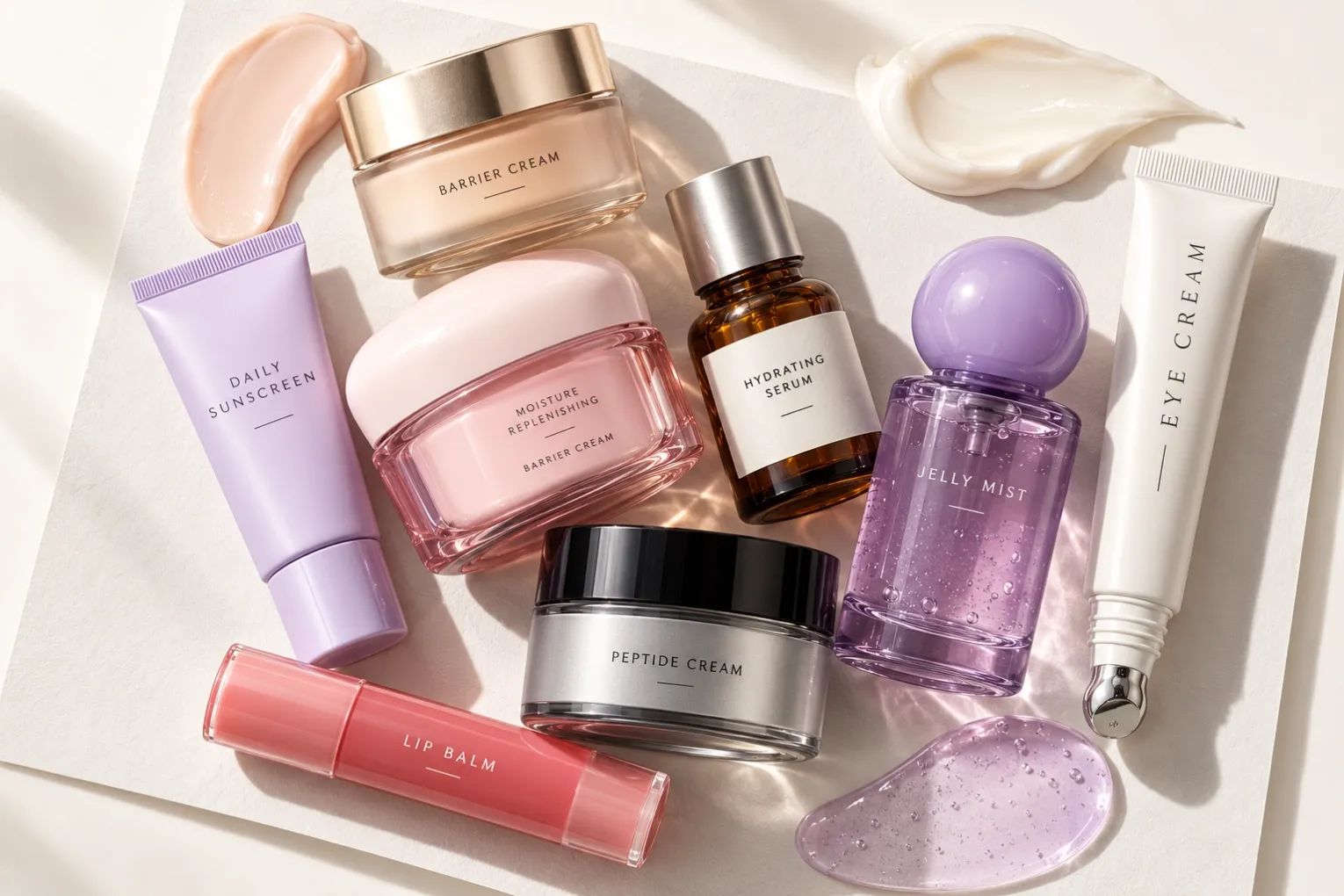
For skincare brands, a popular ingredient is only the beginning of a product idea. A successful launch also needs a clear customer, a suitable formula, packaging that works and a price that fits the market.
Recent industry research points toward growing interest in performance, long-term skin care and the extension of skincare concepts into other beauty categories. BCG’s State of Beauty 2026 discusses consumers’ expanding engagement with performance and longevity, while Spate’s 2026 forecast highlights skincare-inspired development beyond traditional facial products. BCG, Spate
For private label brands, these signals offer useful starting points. The following directions translate that broader market interest into practical product concepts and questions to discuss with a skincare manufacturer.
1. Barrier-Focused Care with a Clear Everyday Purpose
Barrier care gives brands an opportunity to build products around familiar customer concerns: dryness, tightness, comfort and daily moisturization.
A focused collection could include a gentle cleanser, a hydrating serum and a moisturizer. Each product should have a clear role, with textures that work together and suit the intended customer.
For example, a lightweight gel cream may fit customers who prefer a fresh finish, while a richer cream may suit a range positioned around dry-skin comfort. The final choice should follow the product brief and sample evaluation.
What to discuss with your manufacturer:
- The intended skin type and main cosmetic benefit
- Preferred richness, absorption and finish
- Ingredient choices and their role in the complete formula
- Testing needed to support the proposed product claims
A useful brief describes the experience you want customers to have. “A daily moisturizer that absorbs comfortably under makeup” gives development more direction than “a cream with trending ingredients.”
2. Skin Longevity with Specific, Supportable Benefits
Skin longevity is becoming part of the beauty conversation, but the term alone does not explain what a product does.
Brands can make this positioning more useful by translating it into specific cosmetic goals, such as hydration, smoother-looking skin or improved radiance. These goals can then guide formula development, testing and product communication.
Potential concepts include a daily serum, an evening moisturizer or a complementary eye care product. The strongest collection is one in which each product has a defined purpose.
Before selecting a new ingredient, ask what evidence is available, whether it is relevant to the intended use and what testing the finished formula will need. Ingredient information can inform development, but it does not establish every claim for the final product.
3. Daily Sunscreen Designed Around the User Experience
Daily sunscreen presents a development opportunity where product feel, packaging and use occasion matter alongside the protection claim.
A brand might explore a lightweight facial sunscreen, a tinted format or a convenient stick. Each format brings different formulation, packaging and testing considerations.
The destination market should be established early. Permitted ingredients, product classification, labeling and required testing can differ between countries. A formula suitable for one market should not automatically be treated as ready for another.
Questions to resolve before sampling include:
- Where will the product be sold?
- What protection claims are planned?
- What finish and application experience does the customer expect?
- Which tests and documents will be needed?
- Does the packaging dispense the product consistently?
These decisions help define a realistic development route before the brand commits to artwork or production quantities.
4. Sensitive-Skin Positioning with Thoughtful Formula Choices
A sensitive-skin product line requires a clear development brief and an appropriate testing plan.
Rather than relying on broad phrases such as “gentle for everyone,” define the intended customer, product use and sensory expectations. Fragrance preference, cleansing feel, residue and product combinations can all affect the brief.
Possible starting products include a facial cleanser, a simple moisturizer or a body lotion. Fragrance-free development may be an option, depending on the formula and brand requirements.
Ask the manufacturer how the proposed positioning will be evaluated. Claims such as “suitable for sensitive skin” should be considered alongside the finished product and the evidence needed to support them.
5. Body Care with More Defined Product Roles
Body care offers room for brands to create a collection around specific routines and preferences.
Instead of launching several similar lotions, consider products with distinct roles: a daily body wash, a fast-absorbing lotion, a richer body cream or an exfoliating product.
Packaging and application are especially important in this category. A pump needs to work with the formula’s consistency, and a larger pack must remain convenient to use.
For a body care brief, consider:
- Intended application area and frequency of use
- Absorption time and preferred finish
- Fragrance direction and intensity
- Pack size, dispenser and target retail price
This approach helps turn a broad body care concept into a range customers can understand and use.
6. Scalp Care Beyond the Standard Shampoo Range
Scalp care allows hair care brands to explore additional product formats and more specific routines.
Potential concepts include a scalp serum, a pre-wash product or a lightweight scalp mist. The format should follow the use occasion: how the customer applies it, whether it is rinsed off and how it fits with their existing hair products.
A scalp serum, for example, needs more than a suitable ingredient list. The applicator should reach the scalp, the dosage should be practical and the finish should match the intended customer experience.
Brands should distinguish cosmetic positioning from medical or hair-regrowth claims. The proposed claims need to be reviewed for the destination market before development and labeling are finalized.
7. Lip Care with Distinct Textures and Finishes
Lip care gives brands several ways to differentiate a compact product range.
A balm, oil, serum and mask may share a category, but they can serve different customer preferences. One customer may prioritize shine, another a comfortable daytime finish, and another a richer overnight texture.
Define these differences before selecting packaging. A formula’s viscosity affects whether it suits a tube, wand, jar or other dispensing format.
For sampling, review the application feel, tackiness, fragrance, appearance and packaging performance together. This produces a more useful evaluation than judging the formula and pack separately.
8. Multi-Benefit Products with a Clear Main Purpose
Combining benefits can make a product attractive, but adding more claims does not automatically make a stronger concept.
Start with one main customer need, then identify supporting benefits that fit naturally. A daily moisturizer might focus on hydration with a comfortable finish. A cleanser might prioritize cleansing while avoiding an overly stripped after-feel.
For private label development, this creates a clearer brief and a more manageable testing and communication plan.
The product should be easy to explain in one sentence. If its main purpose is difficult to identify, the positioning may need refinement before sampling.
How to Choose the Right Trend for Your Brand
These directions are development opportunities, not a ranking of guaranteed bestsellers. Their value depends on your customer, sales channel, market and commercial requirements.
Before adding a product to your range, assess five questions:
Question | Why It Matters |
|---|---|
Who is the product for? | Defines the formula, texture, packaging and communication. |
What need does it address? | Gives the product a clear reason to exist. |
Does it fit the target price? | Connects formulation and packaging choices to commercial reality. |
Can its claims be supported? | Helps establish testing and documentation requirements. |
Does it complement the existing range? | Creates a more coherent collection and purchasing journey. |
A new brand may benefit from a small, coordinated collection. An established brand may find a more specific opportunity in a missing texture, format or use occasion.
What to Include in Your Product Development Brief
When approaching a private label skincare manufacturer, share enough detail to make the first proposal useful.
Include your product category, destination market, target customer, intended benefits, preferred texture, fragrance direction, packaging reference, estimated quantity and target launch date.
A reference product can also help, particularly when accompanied by clear feedback: what you like about it, what you want to change and how your product should differ.
For example:
We are developing a lightweight daily body lotion for a warm-climate market. We want quick absorption, a subtle fragrance and pump packaging. Please recommend formula and packaging options for our target price and estimated order quantity.
This gives the manufacturer a practical basis for discussing formulas, samples, packaging and production.
Develop Your Next Skincare Product with NUVION
NUVION combines 30 years of skincare manufacturing experience with R&D, design and quality control support. Our portfolio of 8,000+ mature formulas provides starting points for brands exploring new products, while development can be shaped around specific formula and packaging requirements.
Share your target market, product idea and estimated quantity. Our team can review the brief and discuss suitable development options, sampling requirements and production arrangements.
Discuss Your Product Idea →
Frequently Asked Questions
Which skincare trend should a new private label brand start with?
Start with the needs of a defined customer group. A focused collection with clear product roles is easier to develop and explain than a range built around several unrelated trends.
Can a mature formula be adapted to a new product concept?
Depending on the formula and technical feasibility, adjustments may be possible to texture, fragrance, appearance or selected ingredients. Changes should be evaluated for their effect on formula performance, stability and packaging compatibility.
Does using a trending ingredient guarantee product performance?
No. The complete formula, ingredient quality, suitability for the intended use and finished-product testing all matter. Product claims should reflect the evidence available.
What affects the development timeline?
The main factors include formula complexity, sample revisions, testing, ingredient availability, packaging customization and approval timing. Confirm these details before committing to a launch schedule.