Product Development
How to Choose a Private Label Skincare Manufacturer: A Buyer’s Checklist
Learn how to choose a private label skincare manufacturer by evaluating R&D, quality control, certifications, MOQ, packaging, pricing and production timelines.
Choosing a private label skincare manufacturer affects more than your first order. It influences how your products are developed, how consistently they are produced and how easily your brand can introduce new products or reorder existing ones.
An attractive sample and a competitive quotation are useful starting points. Before selecting a supplier, you also need to understand the people, processes and specifications behind them.
This guide explains what to check, what questions to ask and which details to confirm before committing to production.
1. Confirm Who Will Manufacture Your Products
Start by understanding the supplier’s role. Are you speaking directly with the manufacturer, a trading company or a business coordinating several production partners?
Each arrangement can work, but responsibilities should be clear. You need to know who controls formulation, purchasing, production, quality inspection and communication when a problem occurs.
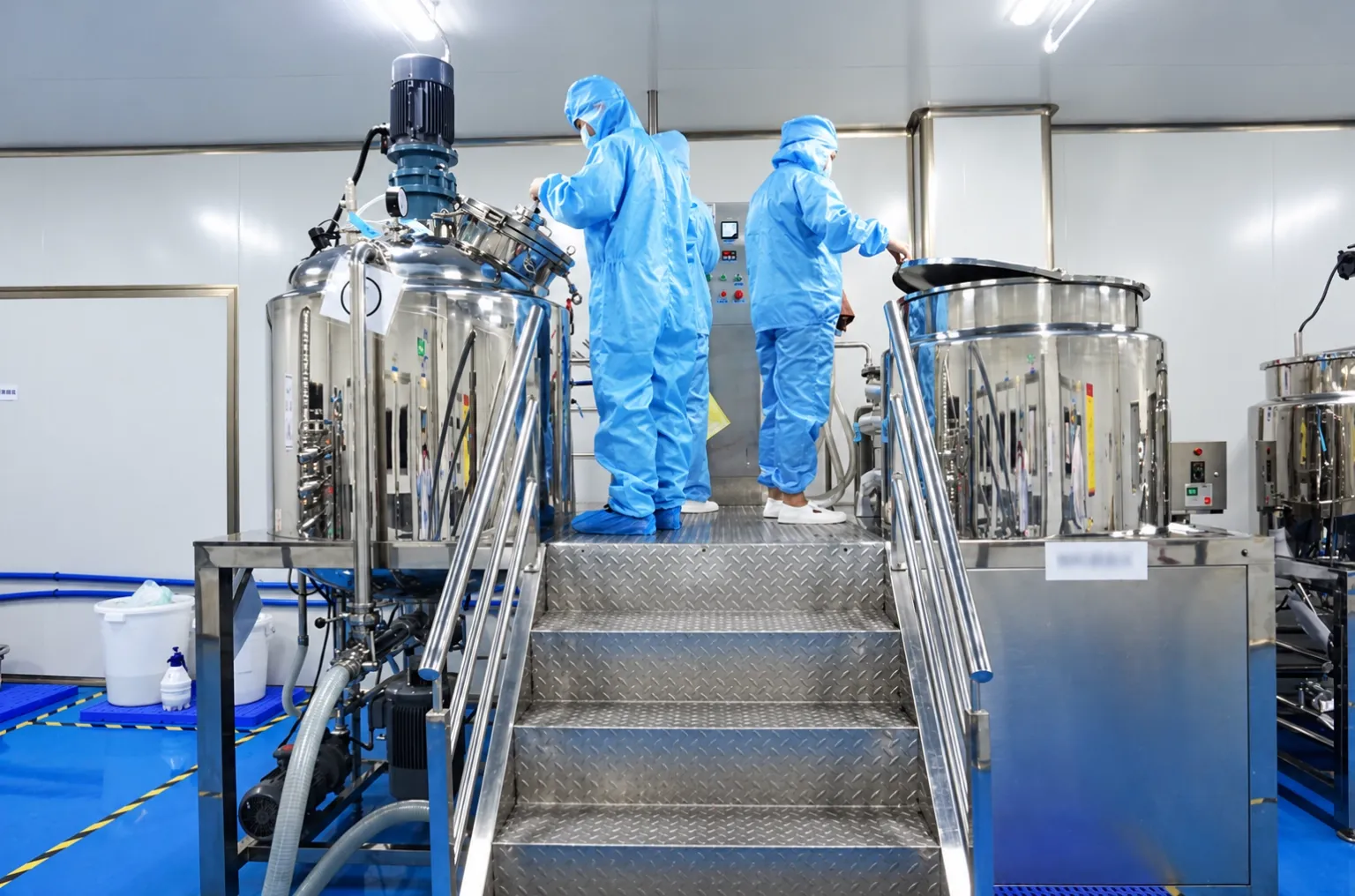
Ask for the manufacturing location and arrange a factory visit or live video tour where practical. Request a walkthrough relevant to your product category rather than relying only on general promotional photographs.
Questions to ask:
- Which facility will manufacture my products?
- Which activities are handled internally or subcontracted?
- Can I see the relevant production and quality control areas?
- Who is responsible for approving finished batches?
A useful supplier should be able to explain how your order will move through the facility and who will oversee each stage.
2. Evaluate Experience in Your Product Category
Years in business provide context, but experience with your intended product is equally important.
A supplier may have extensive experience with body lotion while having less experience with scalp serums, lip treatments or specialized packaging. Ask about comparable products and the development challenges involved.
Look for explanations that connect the formula, packaging and production process. For example, a manufacturer discussing a lightweight lotion should also consider dispensing performance, filling requirements and packaging compatibility.
What to request:
- Examples of relevant product types
- Available sample options
- Typical packaging used for those formulas
- Common development limitations or production challenges
The aim is to determine whether the supplier understands the practical requirements of your project.
3. Understand the Formula Development Options
Suppliers use “private label,” “OEM” and “ODM” in different ways. Confirm the actual service included rather than relying on the name alone.
Your project may involve selecting an existing formula, adjusting a formula or developing a new one from a detailed brief. These routes can involve different costs, timelines and approval requirements.
Ask what can be changed and what must be evaluated again after a change. An adjustment to fragrance, ingredients or texture may affect other aspects of the finished product.
Confirm before sampling:
- Whether the formula is existing, modified or newly developed
- What customization is technically feasible
- Sample fees and revision arrangements
- Testing included in the proposal
- Formula ownership and any exclusivity terms
A large formula portfolio can provide useful starting points. The more important question is whether the team can select and refine an appropriate option for your customers, budget and market.
4. Review Certificates and Supporting Documents
Ask for the actual documents behind the certification logos shown on a supplier’s website.
Check the company name, manufacturing address, standard, scope, issuer and validity dates. Where verification is available, confirm the document with the issuing organization.
ISO 22716 provides cosmetics GMP guidelines covering production, control, storage and shipment. A document referring to this standard should be assessed alongside the facility and activities covered. ISO: Cosmetics — Good Manufacturing Practices
Factory certification, product testing and market registration serve different purposes. Ask the supplier to explain which documents apply to the facility and which apply to your specific product.
For projects intended for the United States, distinguish registration from approval. The FDA states that a cosmetic facility registration or product listing number does not indicate FDA approval, and it does not issue certificates verifying cosmetic facility registration. FDA clarification
Before placing an order, clarify:
- Which current factory certificates are available
- Which product specifications and test reports will be supplied
- Whether documents relate to your exact formula
- What additional work is needed for the destination market
- Who will handle each agreed documentation task
Avoid treating a general certificate folder as confirmation that every proposed product is ready for every market.
5. Agree on How Samples Will Be Evaluated
A sample review works best when both parties know what is being assessed.
Describe your preferred texture, fragrance, color, absorption and finish. If you provide a reference product, explain which features you want to retain and which you want to change.
Keep feedback specific. “Too heavy” is less useful than “leaves more residue than our reference and takes longer to absorb.”
Record your sample feedback against:
- Appearance and color
- Texture and consistency
- Fragrance direction and intensity
- Application and after-feel
- Dispensing and packaging performance
Sensory approval is one part of the development process. Ask separately which stability, microbiological, compatibility or performance evaluations are proposed for the product and when they will be completed.
Confirm the final sample version in writing so an earlier revision is not accidentally used as the production reference.
6. Establish the Standard for Mass Production
A sample is only useful as a production reference when its approved characteristics are documented.
Ask how the manufacturer translates the development formula into production instructions and finished-product specifications. Discuss which characteristics will be measured, which will be assessed visually or sensorially and what acceptance limits will apply.
An approved sample is a reference for comparison. Agreed specifications define how that comparison will be made.
Ask the manufacturer to explain:
- Raw material identification and approval
- Production parameters and batch records
- In-process checks
- Finished-product inspection and release
- Batch identification and retained samples
- Approval procedures for material or process changes
Also clarify what happens when a batch falls outside an agreed requirement. The process for investigating, communicating and resolving deviations should be established before a problem arises.
7. Compare MOQ and Quotations on the Same Basis
The lowest unit price may exclude items included in another supplier’s quotation.
Ask each manufacturer to quote against the same formula brief, pack size, packaging specification and order quantity. Separate development costs from recurring production costs.
MOQ can also apply at several levels. The formula, bottle, pump, printed label and carton may have different minimum quantities.
Check whether the quotation includes:
- Product formula and fill quantity
- Primary packaging and dispensing components
- Labels, decoration and cartons
- Sampling and development fees
- Agreed testing and documentation
- Tooling or printing setup charges
- Packing, freight and other delivery costs
If packaging must be purchased in a larger quantity than the first production order, clarify ownership, storage charges and how remaining components will be used.
This makes it easier to compare the total project cost and understand future reorder expenses.
8. Assess Packaging and Design Support
Packaging affects appearance, application, transport and manufacturing.
Ask how the supplier will confirm that the proposed container and dispenser work with the formula. A design that looks attractive in a mockup still needs practical approval.
For artwork, establish who prepares the files, who reviews the technical details and who approves the final text.
Confirm the following:
- Container material, capacity and dimensions
- Pump, cap or applicator specification
- Formula and packaging compatibility
- Printing process, colors and finishes
- Label and carton artwork versions
- Physical samples or production proofs, where applicable
Design support is most valuable when it connects your brand identity with packaging that can be manufactured consistently within your budget.
9. Check Capacity, Scheduling and Reorder Arrangements
Production capacity should be discussed in relation to your product and order size.
Ask which line is suitable, when it can be scheduled and what must be ready before production begins. Packaging procurement, formula approval and testing may affect the schedule independently of filling capacity.
Request a timeline showing the major stages and the decisions needed from your team.
Key points to clarify:
- What starts the quoted lead time
- Packaging procurement and delivery dates
- Sample and artwork approval deadlines
- Production and inspection arrangements
- Dispatch readiness and shipping time
- Reorder MOQ and planning requirements
Ask how delays are communicated and whether any ingredient or component is likely to affect repeat orders.
10. Agree on Communication and Problem Resolution
Your initial conversations provide a useful indication of how the project may be managed.
Look for clear answers, written specifications and realistic explanations of limitations. A dedicated contact is helpful, but that person also needs access to the teams making technical and production decisions.
Agree on how sample feedback, artwork changes and production updates will be recorded.
Before paying a deposit, confirm the procedure for reporting quality concerns, the evidence needed for investigation and the remedies available under your agreement.
A strong working relationship depends on both teams knowing what has been approved, what remains open and who is responsible for the next decision.
A Shortlist Checklist Before You Place an Order
Use this checklist to compare suppliers against the same requirements:
Area | What to Confirm |
|---|---|
Manufacturing | Facility location, supplier role and subcontracted activities |
Product experience | Relevant formulas, packaging and production experience |
Development | Customization scope, sampling fees and revisions |
Documentation | Current certificates, product documents and responsibilities |
Quality | Agreed specifications, batch controls and release process |
Commercial terms | MOQ, complete quotation and payment milestones |
Packaging | Component specifications, compatibility and artwork approval |
Delivery | Scheduling assumptions, shipping arrangements and reorders |
Communication | Project contact, change records and issue-resolution process |
Ownership | Confidentiality, formula rights and artwork ownership |
Before committing, close any important gaps in writing. A detailed quotation, approved sample and agreed specification give both parties a clearer basis for production.
Discuss Your Skincare Project with NUVION
NUVION brings 30 years of skincare manufacturing experience, 20+ production lines and a portfolio of 8,000+ mature formulas to product development projects.
Our R&D, design and quality control teams support brands in reviewing formula options, developing packaging and establishing production requirements.
Share your product category, target market, estimated quantity and packaging references. Our team can discuss suitable development options and provide the information you need to evaluate the project.
Discuss Your Project →
Frequently Asked Questions
What should I prepare before contacting a skincare manufacturer?
Prepare your product category, target market, intended customer, preferred texture, packaging reference, estimated quantity and target price. If some details are undecided, identify which areas you need help developing.
Should I choose an existing formula or a custom formula?
An existing formula may be appropriate when the available options fit your brief. Custom development provides more scope to address specific requirements, but may involve additional sampling, testing, costs and time. Ask the supplier to compare both routes for your project.
How can I compare manufacturers fairly?
Send the same brief to each supplier and request itemized quotations. Compare development scope, packaging specifications, testing, documentation, lead-time assumptions and payment terms alongside the unit price.
Does a good sample guarantee a consistent production batch?
A sample alone cannot establish production consistency. Ask how the approved sample is connected to documented specifications, production controls and finished-batch release checks.
Can a small brand work with an established manufacturer?
Yes, where the manufacturer’s MOQ, development model and packaging options fit the project. Ask about both the first-order requirements and the conditions for future reorders.